You know your keys are in there somewhere. Unfortunately, so are yesterday’s receipts, a charging cable, two pens, a lip balm, and the sunglasses you thought you left at home. What should have been a quick grab turns into a search through the bottom of your bag, usually while you are standing at a checkout counter or trying to unlock the front door.
A roomy purse or tote is convenient, but an open interior gives small belongings plenty of places to disappear. Even a bag with several pockets can become frustrating when everything goes into whichever compartment happens to be closest. The problem often comes down to giving your essentials a consistent place to land.
Smart bag organizers can make that easier. A well-fitting purse insert, a slim cable pouch, or a protective case can bring some order to the things you already carry. Here, “smart” means thoughtfully designed and useful; there is no app to download or battery to charge. The best choices fit your bag, suit your routine, and help you find what you need without adding unnecessary bulk.
Purse Inserts Give Roomy Bags Some Structure
If you love a tote or handbag with one large main compartment, a purse insert can be a useful starting point. These removable organizers provide smaller pockets inside your existing bag, giving items such as your phone, wallet, glasses, and pens their own places. Instead of settling into a pile at the bottom, everyday essentials stay separated and easier to reach.
Felt inserts are worth considering when you want a little structure in a soft bag. Depending on their thickness and construction, they can help the interior hold its shape, although a stiff insert may change the relaxed look you like. Lightweight fabric inserts are another option when keeping the bag flexible matters more than making it stand upright. Look at the organizer’s empty weight as well as its layout, especially if your handbag already feels heavy.
Fit matters more than pocket count. Measure the usable interior length, width, and height of your bag, taking note of any taper near the opening. An organizer that technically fits the bottom may still interfere with a zipper or leave too little room for your hand. Allow some breathing space, and check that the pockets will accommodate your actual belongings rather than just looking useful in a product photograph.
An insert with handles can also simplify changing handbags. Once your essentials are arranged inside it, you can lift the organizer into another compatible bag. That is particularly handy if you move between a weekday tote and a different purse on weekends, though you will still want to check any pockets outside the insert before switching.
Cable Organizers Keep Charging Gear Together
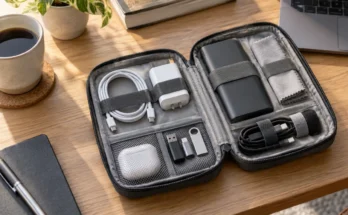
A loose charging cable has a way of wrapping itself around everything nearby. Add a wall charger, earbuds, and a small power bank, and a simple collection of accessories can become an awkward bundle. A compact cable organizer keeps those items together so you can reach for one pouch when your phone needs power.
For everyday use, a slim zippered pouch may be enough. If you carry several accessories, look for a design with a few elastic loops or mesh pockets so you can see what is inside. Make sure the compartments fit the thicker items, too. A pouch with plenty of narrow cable slots is not especially helpful if your charger prevents it from closing comfortably.
Reusable cable ties can improve the setup without taking much space. Coil each cable loosely and secure it before putting it away, avoiding tight bends near the connectors. Keep earbuds in their own charging or protective case rather than loose beside adapters and plugs.
The temptation is to pack every spare cable you own, but an everyday organizer works best when it carries your everyday equipment. Start with the cable, charger, and backup power you actually use. You can add trip-specific accessories when you need them instead of hauling them around all week.
No products found
Try adjusting your search or filters
Small Zippered Pouches Make Everyday Items Easier to Find
Sometimes a couple of simple pouches are all a bag needs. They work especially well in handbags that are too small or irregularly shaped for a full insert. One pouch might hold lip balm, tissues, and a few personal-care items, while another keeps charging accessories together.
Give each pouch a clear job so you know where to look. If every pouch becomes a mixture of receipts, cosmetics, cables, and coins, you have simply divided the clutter into smaller containers. Group items according to how you use them, and keep the groups broad enough that putting things away feels easy.
Different colors or textures can help you recognize a pouch quickly. A bright fabric pouch for personal essentials and a darker one for technology are easier to tell apart than several identical black cases. Mesh or transparent panels can also make contents visible without opening every zipper. For example, Travelon offers accessory pouches with three transparent compartments, illustrating the kind of layout that can help separate small belongings while keeping them in view.
Choose pouches that are easy to open and large enough for their contents without being oversized. You should be able to remove the item you want without emptying everything else into your lap. If using an organizer requires that much effort, it probably needs a simpler layout or fewer contents.
Protective Cases Help Delicate Items Keep Their Place
Some belongings benefit from their own case rather than another open pocket. Glasses are an obvious example: a loose pair can end up beneath a wallet or against a set of keys. A sturdy glasses case provides a designated home and offers more protection from pressure than a thin fabric sleeve, although the exact protection depends on its construction.
Choose the smallest case that comfortably holds your glasses without squeezing the frames. A large hard case can consume a surprising amount of room in a compact handbag, so check its dimensions before buying. If you use a soft sleeve to save space, keep it away from heavy items and remember that it offers less protection against crushing.
A small jewelry case can be useful when you take earrings off during the day, switch accessories before dinner, or travel with a few favorite pieces. Look for separate spaces that keep necklaces from tangling with rings and earrings. For a short outing, a tiny case may be enough; an elaborate travel box is unnecessary if it spends most of its time nearly empty.
The same thinking applies to other delicate items. Give them a suitable case, then assign that case a predictable spot in your bag. Protection is useful, but being able to find the case when you need it is part of the benefit.
Travel Cases Keep Trip Essentials Together
Travel adds another layer of small belongings: a passport, booking details, adapters, and perhaps a few printed documents. A slim travel wallet or document pouch can gather those essentials so you are not checking several pockets while standing in line.
Choose the size around what you carry. A pouch for a passport and a few folded papers can stay fairly compact, while family travel may call for more room and separate sections. Check that the closure works smoothly and that documents fit without being bent awkwardly. Keep frequently needed items accessible while storing sensitive documents in a secure interior compartment.
Travel cases can also help contain toiletries or grooming items, but an ordinary fabric pouch is not a guarantee against leaks. Tighten caps, use suitable containers, and place liquids inside a separate leak-resistant bag when needed. A washable or wipe-clean organizer makes cleanup easier if something does escape.
Before returning to your everyday routine, remove the trip-only contents. A travel case is helpful on the road, but spare adapters and old boarding passes do not need a permanent place in your daily handbag.
Key Clips and Flat Pockets Solve Small Frustrations
Not every useful organizer needs to be a pouch. If your bag has an interior key leash or attachment loop, using it can save you from searching for keys beneath everything else. An added key clip can serve a similar purpose when there is a suitable place to attach it. Check that it stays secure and lets you reach your keys comfortably without awkward pulling.
A flat zippered pocket is useful for receipts, coins, or small paper items that otherwise spread throughout the bag. Give temporary paperwork one place to go, then clear it out regularly. The pocket should help contain the clutter while you need it, rather than becoming a permanent archive of every errand.
Keep your most frequently used belongings in the easiest places to reach. Your phone and keys deserve convenient spots; a backup cable or occasional-use accessory can sit farther down. Organizing around how often you use something makes the arrangement feel natural.
Build a System You Will Actually Keep Using
Before buying anything, empty your bag and take stock of what belongs there. Remove duplicates, discard old receipts, and set aside items you rarely use. Then identify the main annoyance. If everything falls into the bottom of a tote, try an insert. If cables cause most of the trouble, start with a tech pouch. If several small personal items keep disappearing, one zippered pouch may solve the problem.
Resist filling every available space simply because an organizer provides it. Added compartments can encourage you to carry more, and several bulky cases may leave your bag heavier and harder to use. Start small, try the arrangement during a normal week, and adjust anything that gets in your way.
A quick weekly reset helps the system last. Put misplaced items back, clear out paper clutter, and replenish anything you used. Once each essential has a familiar home, putting it away takes very little thought.
The best smart bag organizers make ordinary moments smoother: finding your glasses, reaching for your charger, or getting through the front door without a search. You do not need a perfectly arranged handbag. You need a bag that helps you get on with your day.
Looking for more simple technology that fits comfortably into everyday life? Visit our Carry Collection for practical guides to chargers, wallets, trackers and other everyday carry products. You can also explore Nettie’s Nick Nacks to discover useful ideas for what you listen to, wear, carry, live with, and discover next.